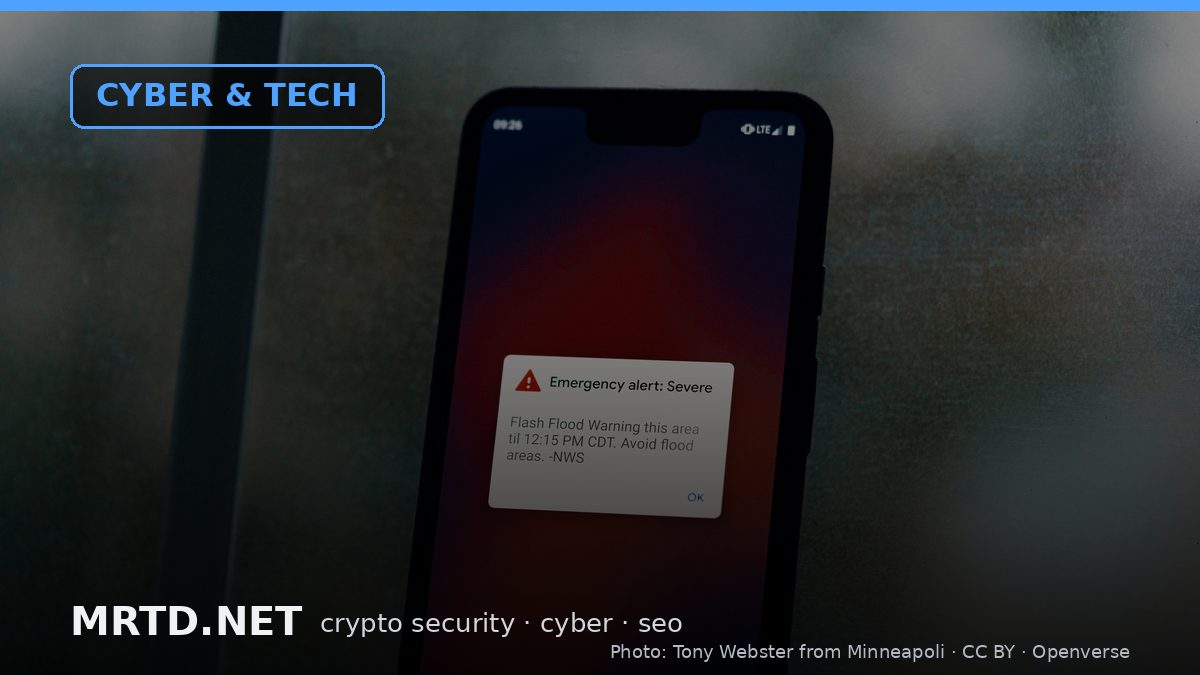
A nation woken by an alert that should never have fired
Late on Friday, June 19, 2026 — around 11:40 p.m. local time and into the early hours of Saturday — phones across multiple Brazilian states blared a top-severity “Extreme Alert,” the class normally reserved for imminent threats to life. It overrode silent mode by design, jolting people awake in São Paulo, Rio de Janeiro, Brasília, Bahia and Pará. There was no emergency. The national public-warning system had been hijacked.
The message was a taunt, not a warning
Instead of evacuation instructions or a hazard notice, the alert read “misantropi4” — a stylized spelling of the Portuguese misantropia (misanthropy, a hatred of humankind), with the final letter swapped for a “4.” The content made clear this was not a malfunction or a mistaken broadcast but a deliberate intrusion into the system that Brazilians are supposed to be able to trust without question.
The regulator pulled the system offline
Brazil’s telecoms regulator, Anatel, took the national warning platform — the Cell Broadcast–based Civil Defense alerting system — offline at around 1:30 a.m. to stop further messages from going out. The Federal Police opened an investigation into what officials have described as a probable remote intrusion into the country’s critical public-warning infrastructure. As of reporting, no suspect has been publicly identified and authorities have not detailed how the system was accessed.
Why a fake alert is far more than a prank
Emergency alert systems are engineered for maximum trust and reach. They bypass silent mode, hit every phone within a geographic cell, and are reserved for genuine threats to life. That same design is exactly what makes a breach dangerous — not because of what this message said, but because of what the next false alarm could do.
A population that is jolted awake by a meaningless “Extreme Alert” learns, a little, to distrust the channel. The real damage of a hijacked warning system is the “cry wolf” effect: every false alert erodes the public’s willingness to act on the real one that may follow — the flood, the wildfire, the evacuation order these systems exist to deliver. A warning channel only works if people believe it.
Critical civic infrastructure is an attack surface
Public-warning platforms belong on the same list as power grids, water utilities and transit systems: civic infrastructure that is high-impact, broadly accessible, and — by mandate — able to command the attention of an entire nation in seconds. They are operated jointly by governments and mobile carriers and tie together many moving parts, which is part of what makes them attractive and difficult to fully lock down.
The risk isn’t hypothetical. Even accidental false alerts have shown how fast a single message spreads panic across a population — the 2018 erroneous ballistic-missile alert in Hawaii, a human error rather than an attack, sent an entire state scrambling before the correction came. A deliberate intrusion into the same kind of system raises the stakes considerably.
What to take from it
For the public: a legitimate emergency alert describes a real, specific hazard and points to official guidance. A cryptic word or an obvious taunt is a red flag, not an instruction. When in doubt, confirmation comes from broadcasters and official government channels — not from the alert alone.
For operators: the episode is a blunt reminder that alert origination needs strong authentication and continuous monitoring, that a fast kill-switch matters (Anatel’s quick takedown limited the damage), and that a clear public-communication plan is part of incident response — because in a warning system, restoring trust is as urgent as restoring the service.
This is a developing story; details may change as Brazilian authorities continue their investigation.